 Brick Daddy
Learn
Understanding Mortar, Brick and Stone
A clear guide for homeowners on what holds a historic house together, and why the right materials matter.
What Is Mortar?
Mortar is the “glue” between bricks or stones. It is a mixture of three basic things:
- Binder — the material that hardens and holds everything together (lime or cement)
- Aggregate — usually sand, which gives bulk, strength, and controls shrinkage
- Water — makes the mix workable
In a healthy wall the mortar is deliberately the softest, most flexible, and most breathable part of the assembly. It takes the wear so the more valuable bricks or stones do not.
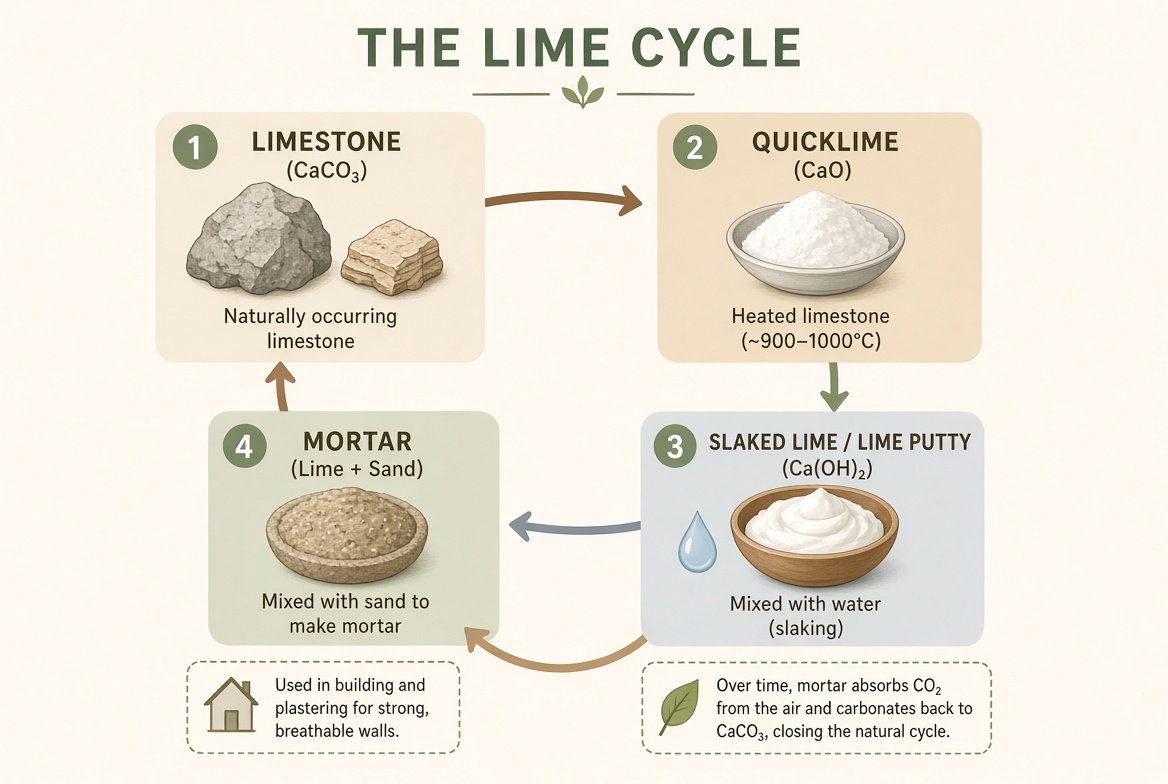
The lime cycle: limestone is heated, slaked with water, mixed into mortar, and over time absorbs CO₂ from the air to become calcium carbonate again.
How Mortar Works With Brick and Stone
Historic bricks (especially those made before the 1930s–1950s in places like Toronto) were often softer and more porous than modern bricks. They were fired at lower temperatures and were meant to work with soft lime mortars.
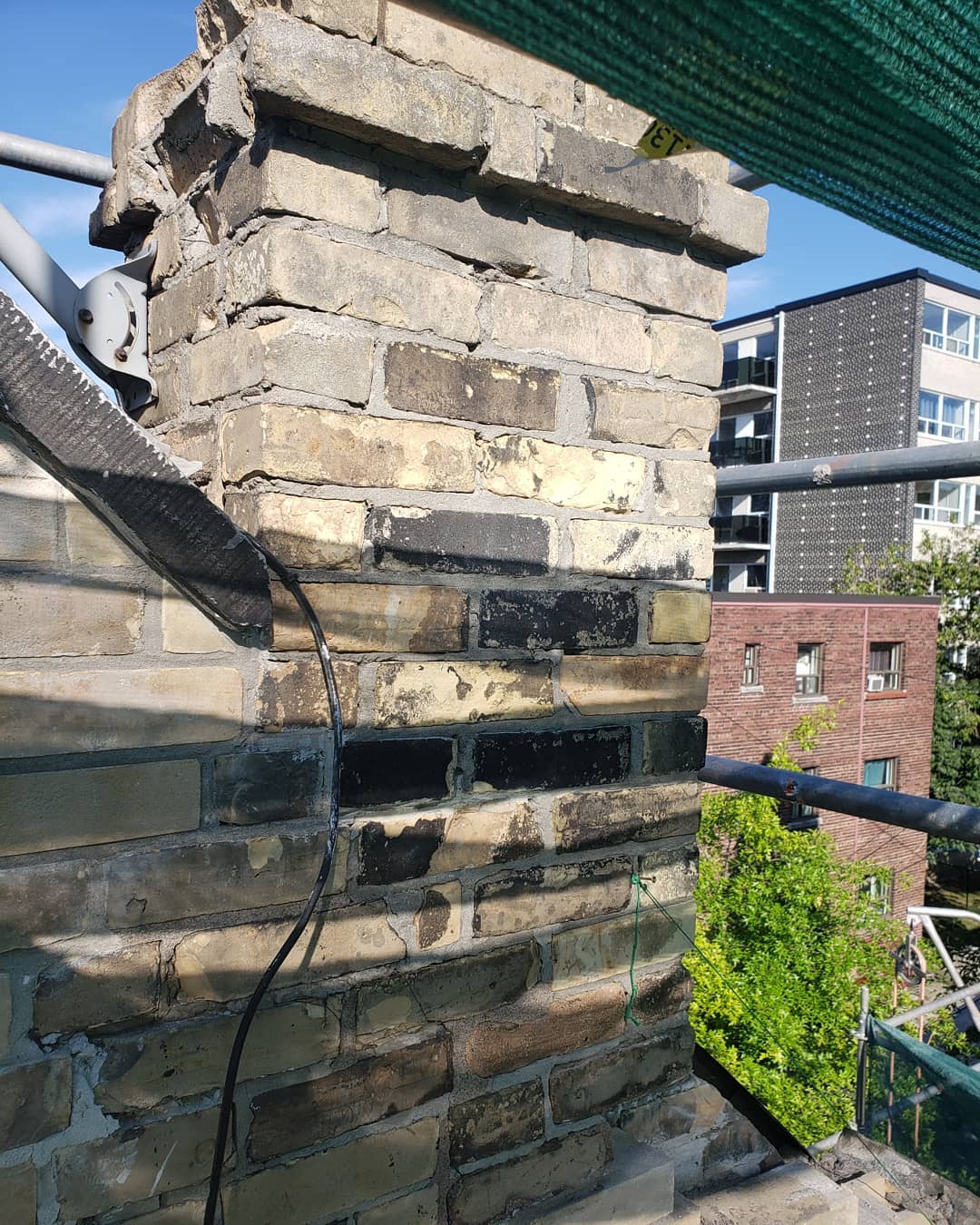
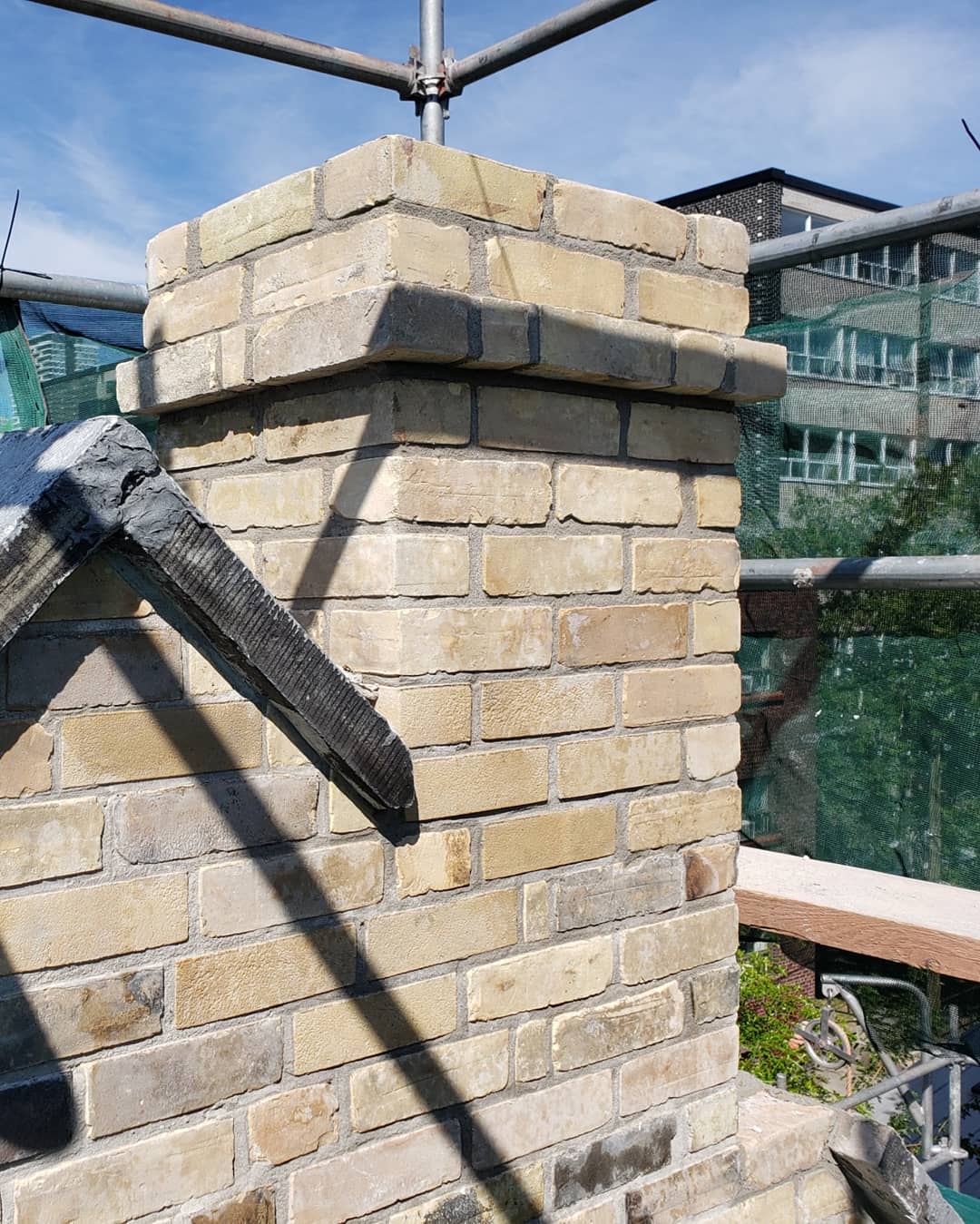
When hard cement mortar is used on soft historic brick, moisture that used to escape through the joints is forced into the bricks. In cold climates, that water freezes, expands, and pops the face of the brick off (called spalling). The hard mortar stays, while the original bricks are destroyed.
The same problem happens with paint, sealers, or parging applied over the brick or stone. These coatings block vapour permeability, so moisture can no longer leave through the wall surface or joints. Water becomes trapped inside the masonry, leading to the same freeze-thaw damage, spalling, and accelerated deterioration—especially on soft historic brick and stone.
Types of Mortar
Modern standards (ASTM C270) classify cement-lime mortars by strength. Strength goes down as lime content goes up:
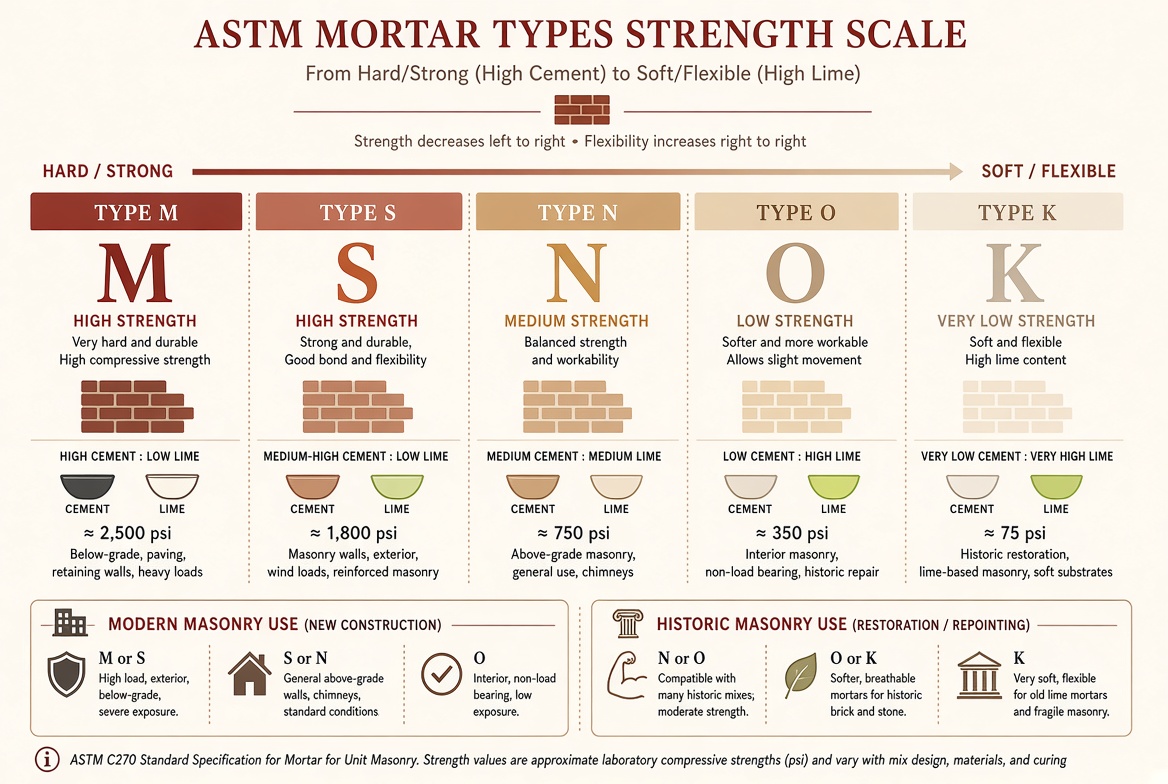
| Type | Typical Strength | Best For | Historic Use? |
|---|---|---|---|
| Type M | Highest (~2,500 psi) | Foundations, heavy loads, below grade | Rarely appropriate |
| Type S | High (~1,800 psi) | Structural walls, high exposure | Usually too hard |
| Type N | Medium (~750 psi) | General above-grade walls | Sometimes, with care |
| Type O | Low (~350 psi) | Softer historic brick, interiors | Often suitable |
| Type K | Very low (~75 psi) | Very soft historic masonry | Preferred for fragile work |
Lime Mortars (Historic Standard)
- Non-hydraulic lime (lime putty) — Sets only by absorbing carbon dioxide from the air (carbonation). Extremely breathable and flexible. Ideal for sheltered or very soft masonry. Often prepared as hot-mixed mortar (quicklime + damp sand) for superior workability and historic authenticity.
- Natural Hydraulic Lime (NHL) — Sets partly with water and partly by carbonation. Graded as NHL 2 (softest), NHL 3.5 (common for many Victorian brick applications), and NHL 5 (stronger, for higher exposure). Made from limestone that naturally contains the right clay impurities. Contains no Portland cement.
- Pozzolanic Hydraulic Lime (PHL) — Pure (non-hydraulic) lime blended with a pozzolan (such as finely ground brick dust, metakaolin, or other silica-rich materials). The pozzolan reacts with the lime and water to create a hydraulic set. Graded similarly (e.g., PHL 2, 3.5, 5). Fully cement-free, highly breathable and flexible. Can be produced more locally and tailored to specific conditions.
One hundred years ago, almost all residential masonry in Toronto and many other Canadian cities was laid in lime-based mortar (often hot-mixed or with traditional pozzolans). Portland cement mortars became common only in the mid-20th century.
Canadian Conditions & Research Insights
Canada’s freeze-thaw climate makes mortar choice especially important. Research by the National Research Council (NRC) Institute for Research in Construction, particularly work by A.H. Paul Maurenbrecher, highlights key points for traditional masonry repair:
- Mortars for older buildings should be sacrificial — weaker and more permeable than the bricks or stones so damage occurs in the joints first.
- Water absorption and vapour transmission of the repair mortar should match or exceed that of the existing materials so the wall can dry and salts can migrate out through the joints.
- Low-strength lime and high-lime mixes can perform well in Canadian conditions when properly formulated, installed, and cured, especially when combined with good water-shedding details (overhangs, copings, etc.).
- Dense, hard cement pointing can trap moisture and lead to frost damage that pushes out bedding mortar or damages units.
- Hydraulic limes (NHL and PHL) and carefully proportioned cement-lime mixes (Type O or K equivalents) are common approaches. Pure non-hydraulic lime (the softest type) is usually best kept for more sheltered walls above ground level. It sets slowly and needs a mason who is experienced with lime so the joints cure properly and hold up in our climate.
How to Repair and Conserve
- Assess first. Identify original mortar, previous repairs, and the hardness/porosity of the units. Laboratory analysis is sometimes warranted for important buildings.
- Remove old mortar carefully. Use hand tools (chisels, rakes) or appropriately selected power tools (such as an angle grinder or Arbortech) when they can be controlled carefully. Power tools can speed up the process on harder joints but require skill to avoid damaging soft brick edges or widening joints. On soft historic brick, hand tools or low-impact power tools are often safer.
- Match the new mortar. Softness, colour, texture, and permeability should match or be slightly softer than the original. Sand choice strongly affects colour and appearance.
- Apply in layers and protect. Lime mortars need careful curing — keep damp and protected from rapid drying, frost, and direct sun for days or weeks.
- Do not add “just a little cement” to speed set. Even small amounts of Portland cement can destroy breathability.
For stone, the same steps apply. Match joint width, profile, and the sacrificial nature of the mortar. Large stone joints may need deeper packing and careful tooling.
Why This Matters to You and Your Home
- Correct mortar protects the original bricks and stones that give your home its character and value.
- Breathable walls manage moisture better, reducing damp, freeze-thaw damage, and interior moisture problems.
- Compatible repairs last longer and cost less over the life of the building than repeated hard-mortar failures.
- Many heritage guidelines and conservation standards require lime-based or compatible mortars on older masonry.
Historic Brick and Stone in Older Homes
Many Toronto homes built before the 1930s used bricks from the Don Valley Brick Works and similar local yards. These bricks were softer than today’s dense, high-fired bricks. Soft stone (sandstone, limestone, etc.) follows the same logic.
Stone walls also rely on compatible mortar. Dense stones can tolerate slightly stronger mixes than very soft stones, but the same principle applies: the mortar should not be harder or less permeable than the stone.
Signs of previous hard-mortar damage: Joints stand proud, brick faces are spalling or crumbling while the mortar looks intact.
Historic Toronto Brickworks
Toronto’s older neighbourhoods were largely built with bricks made locally from clay deposits in the Don Valley, along Greenwood Avenue, and in Yorkville. These bricks are typically softer and more porous than modern high-fired bricks, which is why they need compatible soft mortars.
Don Valley Brick Works (now Evergreen Brick Works)
Founded by the Taylor brothers in 1889 after they discovered high-quality cherry-red clay. It became one of the largest and longest-running brick plants in Ontario, supplying bricks for Casa Loma, Old City Hall, Massey Hall, Queen’s Park, and countless houses. The site operated for nearly 100 years and is now a public park and environmental centre. Both red and buff/yellow bricks were produced.
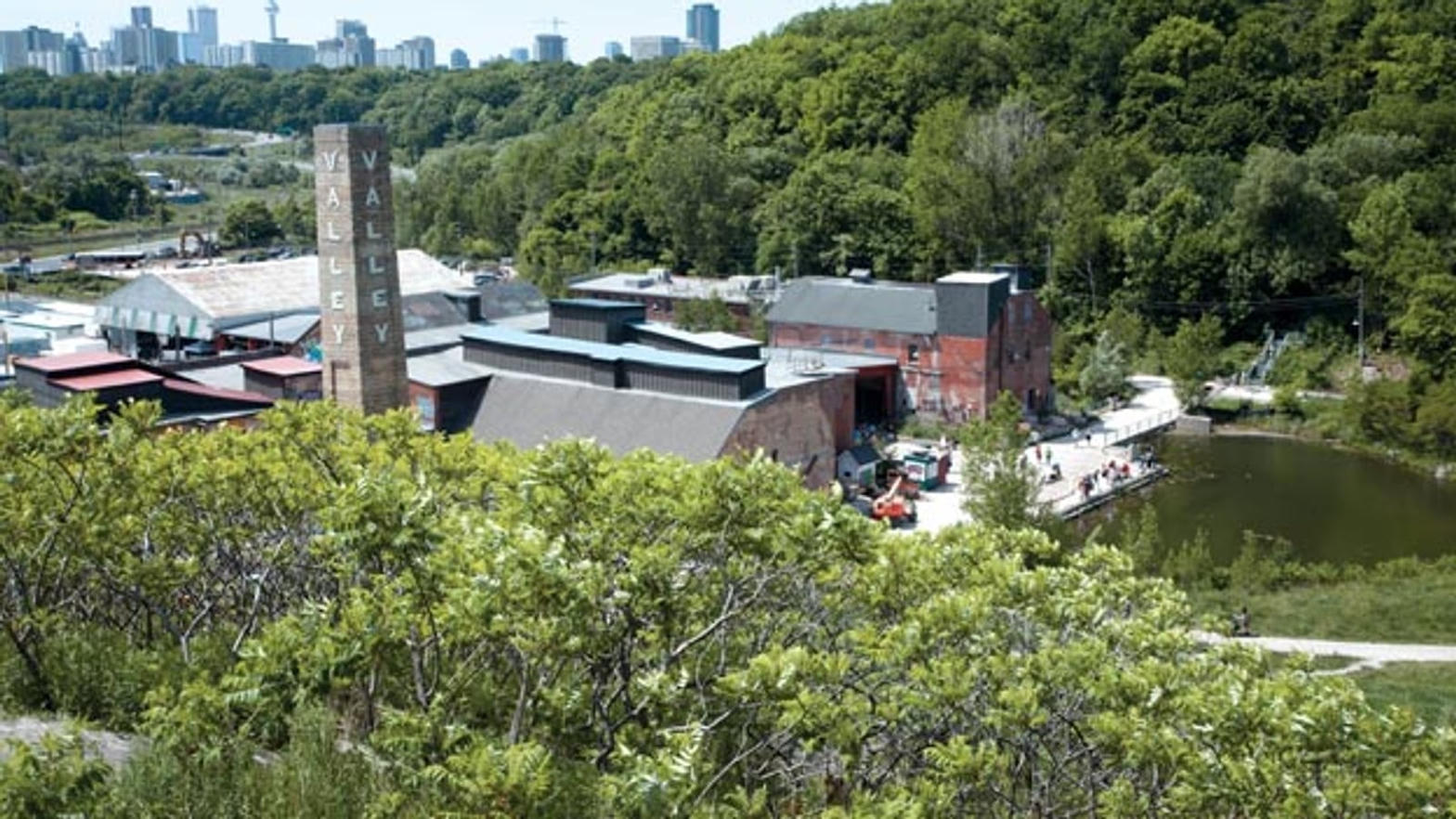
Evergreen Brick Works (former Don Valley Brick Works) today.
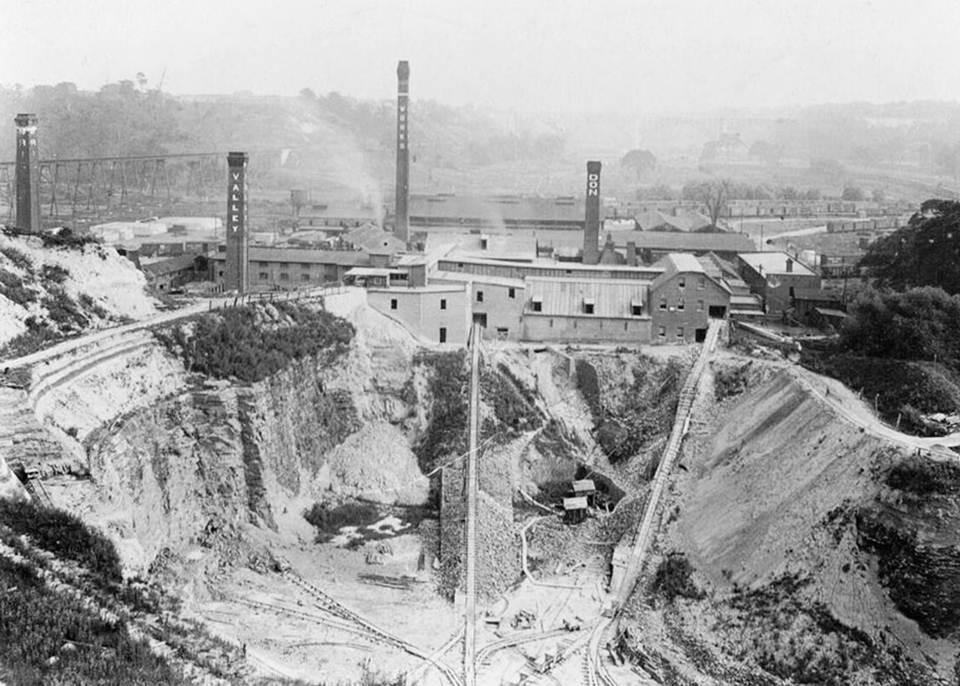
Historic view of the Don Valley Brick Works quarry and plant.
John Price (J. Price) and Greenwood Avenue Yards
John Price established his brickyard on Greenwood Avenue in Leslieville in 1878. His red face brick was widely regarded as some of the finest made in Canada. The Greenwood corridor once had many family-run yards (Morley, Ashbridge, Russell, Bell Brothers, and others). In 1928 the Price operation amalgamated into the Toronto Brick Company; production eventually ended in the mid-20th century as clay deposits were exhausted and land values rose. Some of the old equipment was later moved to the Don Valley site.
Yorkville Brickyards
Earlier yards in Yorkville (Sheppard, Townsley, Pears) used local clay that produced distinctive soft yellow or buff “white” bricks. These were used on many 19th-century civic and religious buildings, including parts of St. James and St. Michael’s cathedrals, as well as houses in the area.
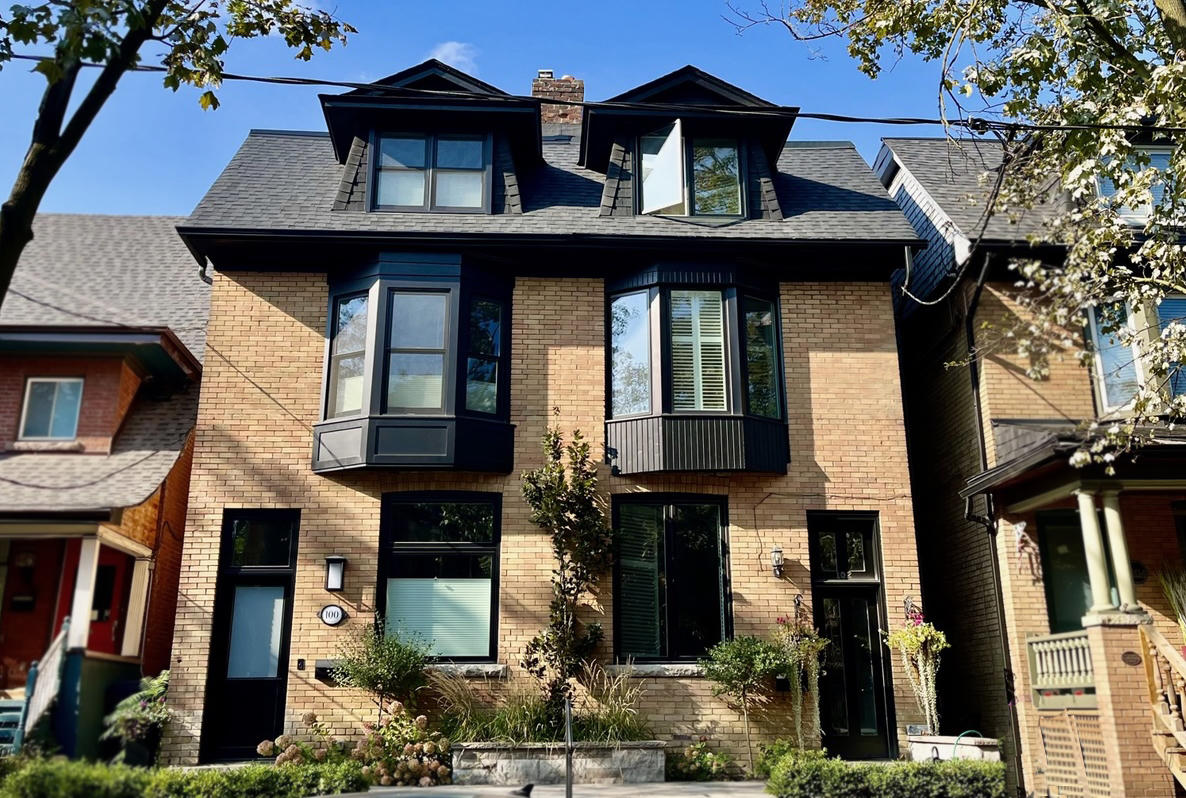
Example of a Toronto house built with buff/yellow brick (common from Yorkville and some other local yards).
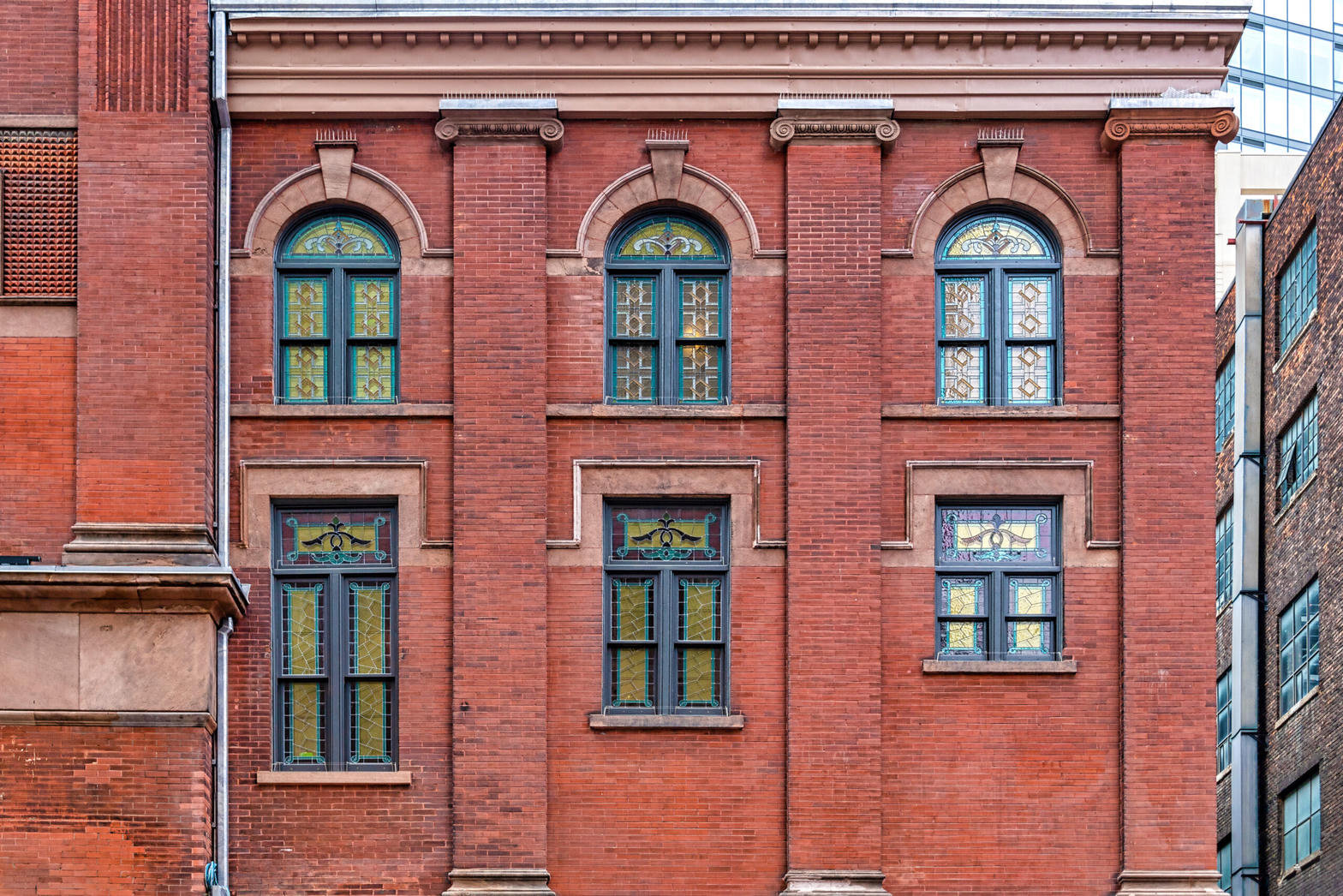
Fine red brick facade typical of high-quality local Toronto brick (Don Valley or Price-style face brick).
When repairing or matching bricks on a Toronto heritage house, the original manufacturer and clay source help explain the colour, texture, and hardness you see. Soft local bricks from these yards are especially vulnerable to hard cement mortars and non-breathable coatings.
Key References
This guide draws on established conservation practice and Canadian research, including:
- Maurenbrecher, A.H.P. (2004). Mortars for repair of traditional masonry. ASCE Practice Periodical on Structural Design and Construction. National Research Council Canada insights on compatibility, freeze-thaw, and sacrificial mortars.
- National Park Service Preservation Brief 2: Repointing Mortar Joints in Historic Masonry Buildings (Mack & Speweik)
- ASTM C270 Standard Specification for Mortar for Unit Masonry
- ASTM E2260 Guide for Repointing (Tuckpointing) Historic Masonry
- ASTM C1707 Standard Specification for Pozzolanic Hydraulic Lime for Structural Purposes
- Canadian Standards Association CSA A179 Mortar and Grout for Unit Masonry
- Society for the Protection of Ancient Buildings (SPAB) technical guidance
- Copsey, N. Hot Mixed Lime and Traditional Mortars: A Practical Guide to Their Use in Conservation and Repair (2019) — historical methods, hot-mixing, pozzolans
- Cowper, A.D. Lime and Lime Mortars (1927, Building Research Station classic)
- Holmes & Wingate, Building with Lime, and related lime conservation literature
This guide is for general education. Every building is unique. For repairs on historic masonry, talk to someone who works with the wall every day.